
EB-5 Retrogression Risk 2026: Why This Window May Close Faster Than Expected
The EB-5 market in early 2026 feels stable on the surface. Reserved categories remain current. Visa Bulletin movement has been favorable. Filing windows are open.
But if you look beneath the surface, a different picture is emerging.
The system is not stabilizing. It is building pressure.
And when that pressure releases, it usually does so quickly.
The Market Is Misreading Stability
Most investors interpret today’s Visa Bulletin as a sign that conditions are improving. Dates are moving. Categories are current. Processing appears to be progressing.
This interpretation is incomplete.
Visa Bulletin stability does not mean demand has disappeared. It often means demand has not yet fully materialized into visa usage.
In other words, today’s calm may simply reflect timing - not equilibrium.
What Retrogression Actually Means
Retrogression occurs when visa demand exceeds available supply within a fiscal year. When that happens, the government moves priority dates backward to control the flow of approvals.
For investors, this translates into:
- Longer wait times
- Delayed green card issuance
- Reduced flexibility in strategy
It is not a theoretical risk. It is a recurring feature of the system.
Why 2026 Is Different
Several forces are converging at the same time:
1. Accumulating Post-RIA Demand
Since the introduction of reserved categories, investor demand has been steadily building. Many applications have been filed, but not all have yet translated into visa consumption.
This creates a lag effect. Demand exists before it becomes visible in the Visa Bulletin.
2. Structural Pressure in Unreserved Categories
Unreserved EB-5 already shows clear signs of constraint, particularly for high-demand countries. Movement in these categories is limited and fragile.
This pressure does not disappear. It redistributes across the system.
3. Reserved Categories Are Not Immune
Reserved categories remain current today, but they are in an early demand phase. As filings accelerate, these categories will eventually face the same mathematical limits.
The absence of a cutoff today does not mean the absence of future pressure.
4. Fiscal Year Mechanics
Visa allocation resets annually, but demand does not. As the fiscal year progresses and visa usage increases, the system tightens.
When usage accelerates late in the year, retrogression can appear quickly and unexpectedly.
The Early Warning Signals
Retrogression does not arrive without signals. We are already seeing them:
- Faster-than-expected priority date movement earlier in the year
- Growing filing volumes in reserved categories
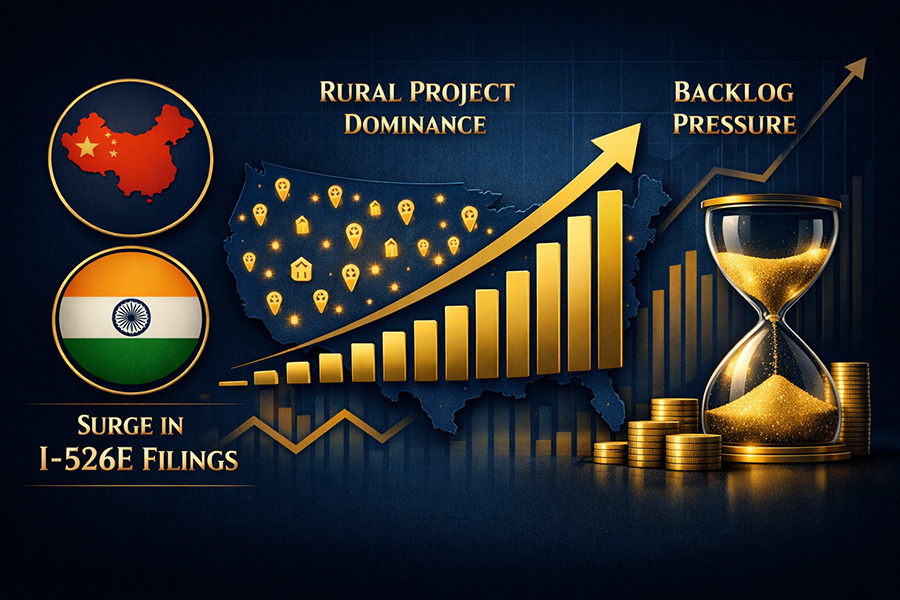
- Persistent backlog pressure in unreserved categories
- Increased reliance on timing-based visa allocation
These are not signs of stability. They are signs of imbalance.
When the system moves too easily in one direction, it often prepares to correct in the other.
What Happens If Investors Wait
The biggest risk in 2026 is not making the wrong investment. It is misreading timing.
If retrogression returns:
- New filings may fall behind newly established cutoff dates
- Processing timelines may extend significantly
- Strategic advantages like concurrent filing may narrow
Investors who delay are not avoiding risk. They are shifting it into timing exposure.
How Sophisticated Investors Are Positioning
The most experienced participants in the EB-5 market are not assuming that current conditions will hold. They are acting within the window that exists today.
Key strategies include:
- Filing while categories remain current to secure priority dates
- Focusing on reserved projects before demand fully materializes
- Structuring applications for speed to benefit from current processing conditions
- Aligning with the 2026 grandfathering timeline to reduce long-term program risk
This is not about reacting to panic. It is about understanding how the system behaves over time.
Bottom Line
The EB-5 market in 2026 is not stable. It is temporarily balanced.
That balance depends on timing, not fundamentals.
And timing windows in EB-5 tend to close faster than most investors expect.
The opportunity today is not that the system has improved.
It is that the system has not yet adjusted.
Investors who recognize this difference will move early.
Those who do not will move later - on less favorable terms.