
The March–April 2026 Visa Bulletin Anomaly: Why Dates Jumped - and Why They May Reverse
The March and April 2026 Visa Bulletins created a wave of optimism across the market. Priority dates moved forward sharply across multiple employment-based categories, and for many observers, it looked like real progress.
But if you have been in EB-5 long enough, you know this: not all forward movement is real.
What we are seeing right now is not a structural improvement. It is a temporary distortion. And investors who misread it may make the wrong strategic decisions.
What Actually Happened in March–April 2026
The data is clear. Priority dates across employment-based categories moved forward faster than usual, in some cases by several months in a single bulletin.
At the same time:
- USCIS allowed applicants to use the more favorable “Dates for Filing” chart
- Filing windows opened wider than expected
- Backlogged categories suddenly appeared to ease
For many investors, this created a simple narrative: things are getting better.
That conclusion is dangerously incomplete.
This Is Not Demand Relief - It Is Supply Timing
Visa Bulletin movement is not driven by optimism. It is driven by math.
The forward movement we are seeing is primarily the result of temporary visa availability shifts:
- Underutilized visas from other categories being reallocated
- Short-term gaps between demand and issuance
- Administrative timing in processing and allocation
In simple terms: the system had extra visas in the moment - so it moved dates forward.
That does not mean demand disappeared. In fact, demand continues to build in the background.
The Hidden Signal: Pressure Is Increasing, Not Decreasing
Here is the key insight most investors are missing.
If the system needs to push dates forward aggressively, it often means the government is trying to utilize available visa numbers before the fiscal year constraints tighten again.
And once demand catches up - which it always does - the system corrects.
That correction is called retrogression.
When dates move forward too fast, they often move backward later. The question is timing, not probability.
EB-5: Why This Matters More Than in Other Categories
For EB-5 investors, this anomaly is especially important because the market is already structurally split:
- Unreserved EB-5: backlog exists, especially for China and increasingly India
- Reserved EB-5: still current - but demand is accelerating
This creates a dangerous illusion:
- Unreserved looks like it is improving
- Reserved looks stable
In reality:
- Unreserved is structurally constrained
- Reserved is still in its early demand cycle
Why a Reversal Is Likely
There are three forces pointing toward a likely reversal:
1. Accumulating Demand
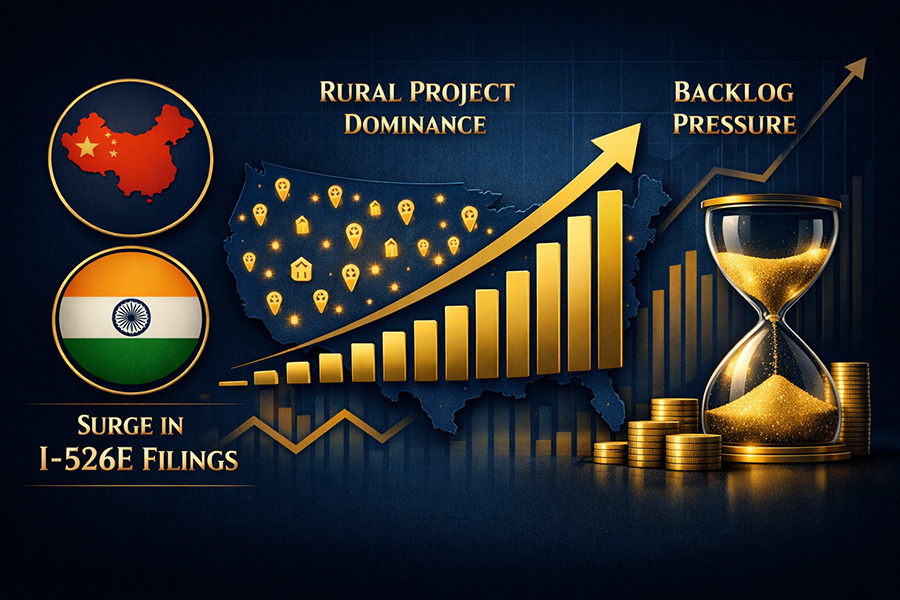
I-526E filings continue to build, especially in reserved categories. That demand has not yet fully translated into visa usage.
2. Fiscal Year Constraints
Visa allocation operates within strict annual limits. Once usage accelerates, the system tightens quickly.
3. Historical Pattern
This is not new. Similar forward jumps in past cycles were followed by retrogression once visa demand normalized.
What Smart EB-5 Investors Are Doing Right Now
The correct interpretation is not optimism. It is urgency.
Here is how sophisticated investors are positioning:
- Using the window: filing while dates are favorable
- Prioritizing reserved categories: before they develop cutoffs
- Structuring for speed: targeting projects with faster adjudication
- Locking in grandfathering: ahead of the 2026 deadline
They are not assuming the window will stay open. They are acting because it will not.
Bottom Line
The March–April 2026 Visa Bulletin is not a signal that EB-5 is getting easier.
It is a signal that the system is temporarily out of balance.
And when the system rebalances, it usually does so quickly.
If your strategy depends on today’s dates remaining available, you are taking timing risk.
If your strategy uses today’s window before it closes, you are playing the market correctly.