EB‑5 vs. Proposed Gold Card Scheme: Costs, Jobs & Investor Risks – Nov 2025
Two Paths to Residency
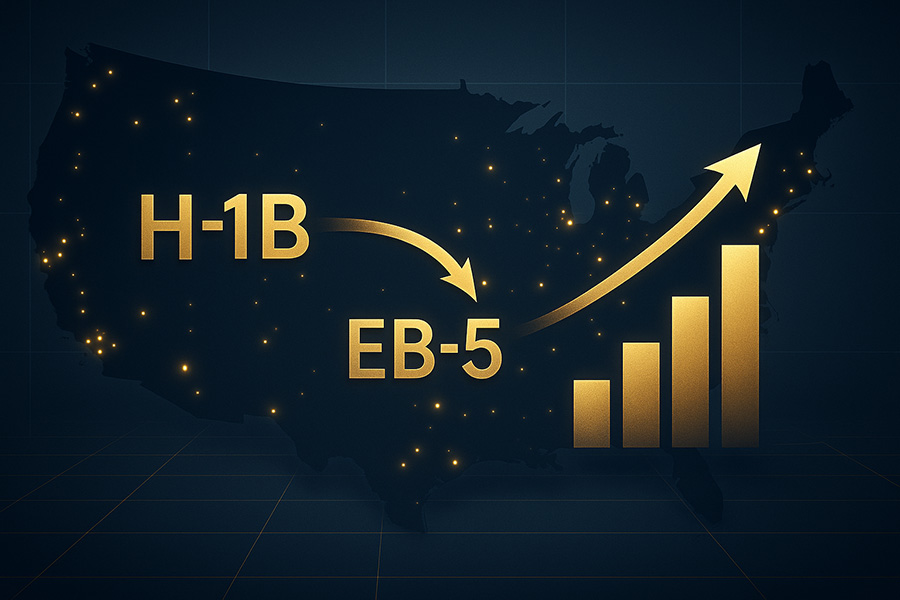
Over the years, I have watched as investors used the EB‑5 program to obtain permanent residency by investing in job‑creating projects. Recently, however, there has been talk of a different pathway: a so‑called “Gold Card” that would grant residency in exchange for a much larger financial contribution to the government. This idea has sparked debate and prompted questions about how it would differ from the well‑established EB‑5 route.
Understanding EB‑5
The EB‑5 program requires an investment of $800,000 in a rural or high‑unemployment area or $1.05 million elsewhere. Investors must place their funds in a new commercial enterprise that creates at least ten full‑time jobs for U.S. workers. After filing the initial petition and (if eligible) adjustment of status, applicants may receive work and travel authorization while they await adjudication. Once approved, they obtain conditional residency and later apply to remove those conditions by demonstrating that the jobs were created. The program is codified in law, has clear regulations and requires transparency in how funds are used.
The Proposed Gold Card Concept
The Gold Card proposal, floated as an executive initiative, would allow individuals to obtain permanent residency by making a large monetary contribution directly to the U.S. government. Early reports suggest price points ranging from $1 million for individuals to as much as $5 million for a premium tier. Unlike EB‑5, this plan would not require investment in a job‑creating project. Instead, it appears to be a donation‑based pathway that funnels funds into government coffers without creating new employment opportunities. Supporters argue that it would simplify the process and bring in significant revenue; critics contend that it undermines the principle of tying immigration benefits to economic development.
Key Differences
- Investment vs. Donation: EB‑5 funds must be invested in a business that creates jobs, whereas the Gold Card appears to involve a one‑time contribution with no requirement to generate employment.
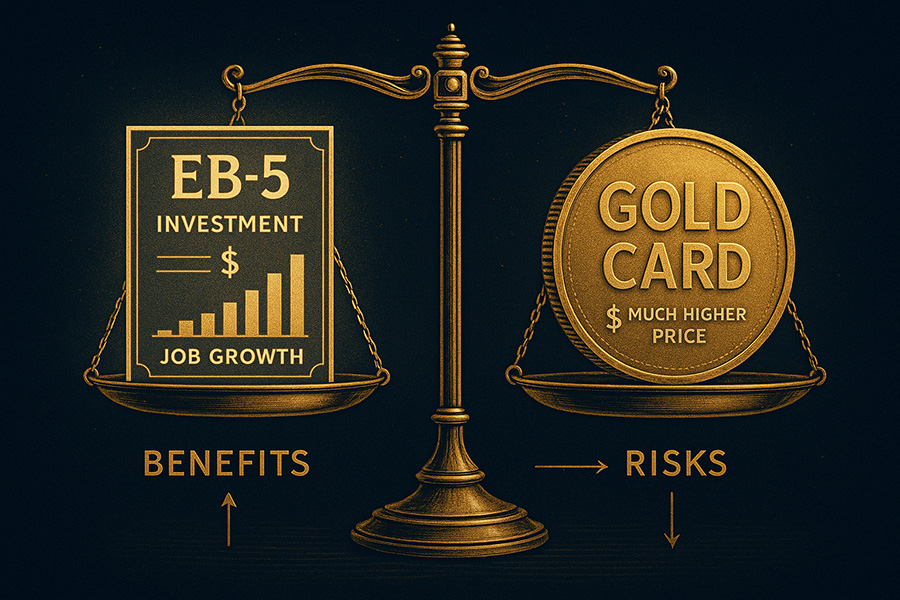
- Cost: EB‑5 investments start at $800,000 for targeted areas. The Gold Card would require contributions of at least $1 million, with some proposals suggesting a $5 million tier.
- Legal framework: EB‑5 is established by congressional statute and has detailed regulations and oversight. The Gold Card is only a proposal; its legal authority, administrative procedures and oversight mechanisms remain unclear.
- Job creation: EB‑5 investors must demonstrate job creation to remove conditions on residency. The Gold Card has no such requirement, meaning it may not directly contribute to employment growth.
- Uncertainty and risk: Because the Gold Card is a new concept, there are many unknowns: how it will be implemented, whether it will face legal challenges, how it will handle tax implications and whether it will fit within existing visa caps. EB‑5, on the other hand, has a long track record, although it is still subject to annual visa limits and processing delays.
Implications for Investors
For prospective investors, choosing between these paths involves weighing cost, certainty and purpose. The EB‑5 program offers a lower capital requirement and channels money into projects that create jobs, thereby supporting local economies. It is backed by decades of legislation and regulation. However, it also involves due diligence, longer processing times and job‑creation obligations. The Gold Card concept promises simplicity but at a much higher price, and it lacks the regulatory clarity and social impact of EB‑5.
Another important consideration is timing. EB‑5 petitions filed by September 30 2026 are grandfathered under current law, protecting them even if the program expires. Investors who delay might miss this deadline and face uncertainty if lawmakers fail to reauthorize EB‑5. Meanwhile, the Gold Card proposal has no clear timeline for implementation and may never materialize.
Weighing the Options
Ultimately, deciding between EB‑5 and a hypothetical Gold Card comes down to individual priorities. If job creation and a proven legal framework matter to you, EB‑5 remains the more reliable choice. If speed and simplicity are paramount and the higher cost is acceptable, you might consider the Gold Card—if it ever becomes available. As always, consult with knowledgeable professionals, stay informed about policy developments and align your immigration strategy with your financial goals and risk tolerance.