
Early 2026 I‑526E Processing Data: What Investors Need to Know
Filings Surge Ahead of Grandfathering Deadline
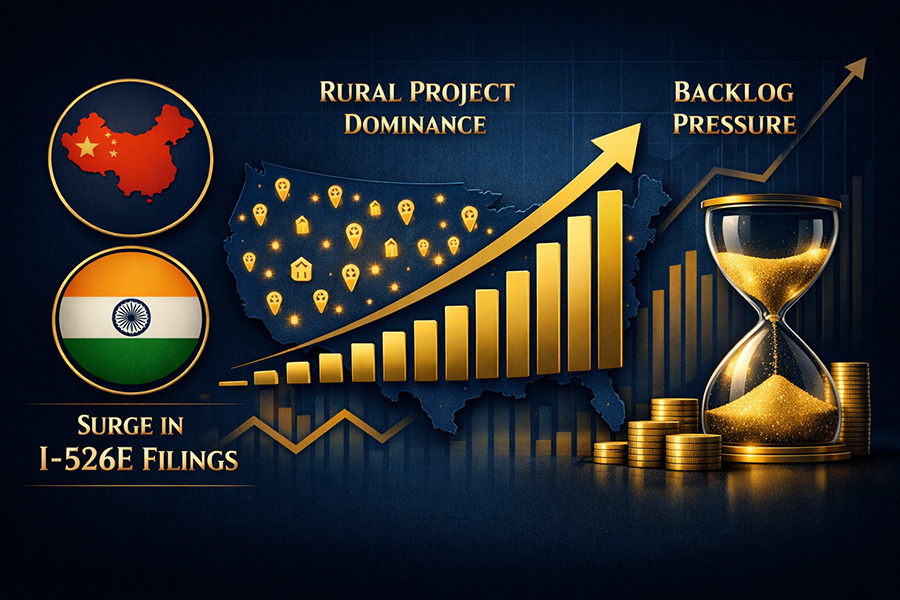
USCIS recently released updated I‑526E processing data covering filings through mid‑2025, and the numbers are striking. New petitions have been climbing steadily since the EB‑5 Reform and Integrity Act (RIA) rebooted the program in March 2022. Analysts note a sharp uptick as the September 30 2026 grandfathering deadline draws nearer. Investors are scrambling to file before the window closes, and the petition backlog is growing faster than visa supply can keep up. If this trend continues, both rural and urban set‑aside categories could retrogress – especially for applicants from high‑demand countries.
Rural Projects Dominate the New Landscape
The data reveal a dramatic shift toward rural EB‑5 projects. Roughly 60 percent of recent filings are for rural investments, largely because these projects enjoy priority processing and a larger visa allocation. Filings spiked twice – first in March 2024 ahead of fee increases and again in February 2025 after a “gold card” scare – indicating investors are willing to accelerate their timelines to secure set‑aside visas.
India and China Face Different Prospects
Although rural and high‑unemployment categories remain current, country‑specific differences are emerging. Indian investors account for a large share of approvals, partly because they have been quicker to litigate delays through mandamus actions. Chinese investors, meanwhile, are experiencing longer processing times and could face backlogs sooner if rural filings continue at the current pace. The data suggest that unreserved visas for India and China may retrogress later in 2026, making timely filing critical.
Concurrent Filing and Early Action
Applicants living in the United States on H‑1B, F‑1, E‑2 or other non‑immigrant visas can take advantage of concurrent filing, which allows them to apply for adjustment of status and receive work and travel permits while their I‑526E petitions are pending. Given the expected surge of petitions before the September 2026 deadline, investors should start preparing their source‑of‑funds documentation now and select reputable regional centers. The report emphasises acting early, hiring experienced counsel and choosing projects with strong job‑creation models.
Key Takeaways
- Filings are rising fast: New petitions have surged in anticipation of the grandfathering deadline, signalling possible backlog pressure later in 2026.
- Rural projects lead the way: About 60 % of filings target rural projects, which offer priority processing and more visas.
- Country disparities: Indian investors are seeing more approvals than Chinese investors due to aggressive litigation, but both groups should prepare for potential retrogression.
- Don’t delay: Use concurrent filing if eligible, prepare your documentation early and pick a strong regional center to navigate the crunch before September 30 2026.
Conclusion
The first I‑526E statistics of 2026 paint a clear picture: demand for EB‑5 visas is accelerating, especially in rural categories, and the backlog clock is ticking. Investors – particularly those from India and China – should act swiftly to secure their priority dates, leverage concurrent filing and choose projects that can withstand increased scrutiny. By planning ahead and focusing on quality, you can stay ahead of the curve as the EB‑5 landscape evolves.