Transforming Communities: Rural EB‑5 Success Stories – Year‑End 2025
How Investment Is Breathing Life Into Small Towns
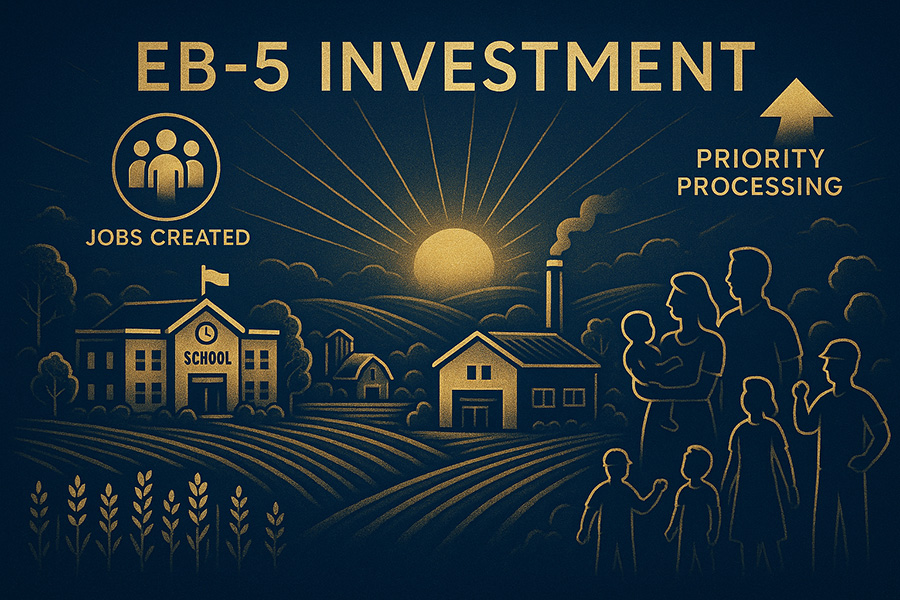
As someone who follows the EB‑5 program closely, I’ve been struck by the remarkable impact rural projects have on communities. When investors channel their capital into a new hotel, hospital or manufacturing facility in a rural area, they don’t just secure a green card for themselves; they help create jobs, improve infrastructure and revitalize regions that may have struggled economically for decades. The rural focus of the EB‑5 Reform and Integrity Act reserves 20 percent of all visas for rural investments and offers priority processing for these applications. That means investors can receive decisions more quickly while communities benefit from much‑needed development.
What Makes a Rural Project a Success?
- Meaningful job creation: Rural projects must create at least ten full‑time jobs per investor, but the most successful ones go far beyond the minimum. For example, a food‑processing plant in the Midwest funded through EB‑5 created more than 150 permanent positions, attracting families back to the area and supporting local farmers.
- Community engagement: Projects that consult with local leaders and integrate community needs—such as building a hospital or updating a water treatment facility—are more likely to gain public support and long‑term viability.
- Transparent management: Rural investments often rely on experienced regional‑center operators who provide clear reporting, independent audits and regular updates to investors. This transparency helps protect investors and ensures funds are used efficiently.
- Diverse economic impact: Beyond direct jobs, successful projects stimulate ancillary businesses. A new hotel can spark restaurant openings and retail growth, while a factory can revive supply chains and logistics services.
Recent Success Stories
Across the country, rural EB‑5 investments are generating real results:
- Healthcare expansion in the Mountain West: A rural hospital project received funding from dozens of investors and now provides state‑of‑the‑art medical care to a previously underserved county. The hospital created over 200 full‑time jobs, including positions for doctors, nurses and support staff, and spurred the construction of nearby housing and retail.
- Manufacturing revival in the Midwest: A dormant factory was converted into a food‑processing facility, employing local workers and sourcing produce from regional farms. The project’s success has attracted additional investment, leading to upgrades in transportation infrastructure and broadband access.
- Tourism boost in the Southeast: A lakeside resort funded through EB‑5 brought millions in tourism revenue to a small town. Beyond the hotel staff, the project created hundreds of indirect jobs in construction, maintenance and hospitality services.
Priority Processing and the Numbers Behind It
One reason rural projects are so attractive is the promise of faster adjudication. Under the reform law, rural petitions are supposed to be processed ahead of unreserved cases. Recent data suggest that demand for rural projects has surged: by mid‑2025 more than 6 000 investors chose rural projects, nearly matching the number who selected high‑unemployment areas. When spouses and children are factored in, that translates into tens of thousands of people competing for roughly 3 000 visas each year. Priority processing helps ensure that these rural investors are not stuck in the same long queues as those in unreserved categories. However, as more applicants discover this advantage, wait times could lengthen again, so filing sooner rather than later is prudent.
Challenges and Opportunities Ahead
Despite the positive outcomes, rural projects present challenges. Smaller communities may lack the workforce or infrastructure to support rapid growth. Investors should conduct thorough due diligence to ensure a project’s projections are realistic and that the regional center has a strong track record. It’s also important to consider long‑term sustainability: will the project continue to thrive after construction, or does it rely too heavily on temporary jobs?
On the opportunity side, rural set‑aside visas may remain available longer than unreserved slots, and recent court rulings have kept filing fees at manageable levels. With the September 30 2026 deadline for grandfathered petitions approaching, investors who act now can secure a spot in the program and contribute to transformative projects that benefit both their families and American communities.
Conclusion
Rural EB‑5 projects are more than just investment vehicles; they are catalysts for change. By funding hospitals, factories and resorts in underserved areas, investors help create jobs, improve infrastructure and breathe new life into small towns. As we reach the end of 2025, these success stories demonstrate how aligning immigration goals with community development can lead to lasting, positive outcomes.